
Grape variety
Tsolikouri
White variety · Imereti
Western Georgia’s most widely planted white grape, valued for its freshness, mineral character and versatility. Tsolikouri is deeply rooted in Imeretian winemaking traditions, from everyday family wines to the naturally semi-sweet wines of Tvishi.
- Colour
- White
- Home region
- Imereti, Western Georgia
- Harvest
- October to November
- Acidity
- Lively
Origin
Native to Imereti, Tsolikouri is now grown across western Georgia, from the Black Sea coast to Racha. Around 850 hectares are under cultivation, tended by some 10,000 growers. Its thick skins help it withstand the region’s frequent rainfall.
The name
The origin of the name is uncertain. One interpretation links it to the Georgian word tsoli, meaning ‘wife’. Regional names include Obchuri Tsolikouri and Melkos Tsolikouri.
In the vineyard
Late-ripening, usually harvested from late October into November. Vigorous and productive, with good resistance to downy mildew, an advantage in western Georgia’s humid climate.
The grapes
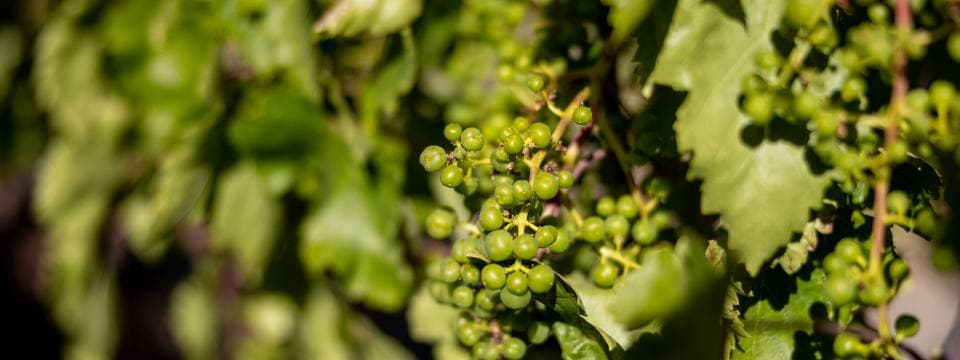
Medium-sized, round, greenish-yellow berries with thick skins and a waxy bloom, growing in conical bunches.
Taste and aroma
Green apple, pear, lemon zest and wet stone, with lively acidity and a clean, mineral finish. Fuller and rounder when made with skin contact.
How we make it
Following the Imeretian tradition, we ferment Tsolikouri in qvevri with short skin contact, measured in days rather than months. We also make a Pét-Nat from Tsolikouri using the ancestral method.
Food pairings
River fish, fresh cheeses, herbs and the vegetable-based dishes of Imereti. Our Pét-Nat is particularly suited to an aperitif.
More about the grape
Tsolikouri is the grape behind Tvishi, the naturally semi-sweet white wine from a small wine-growing area in Lechkhumi.
Our wines
Our Tsolikouri wines
No wine from this variety is released yet. Ask in the cellar — there is usually a barrel sample.
Other grapes we work with