
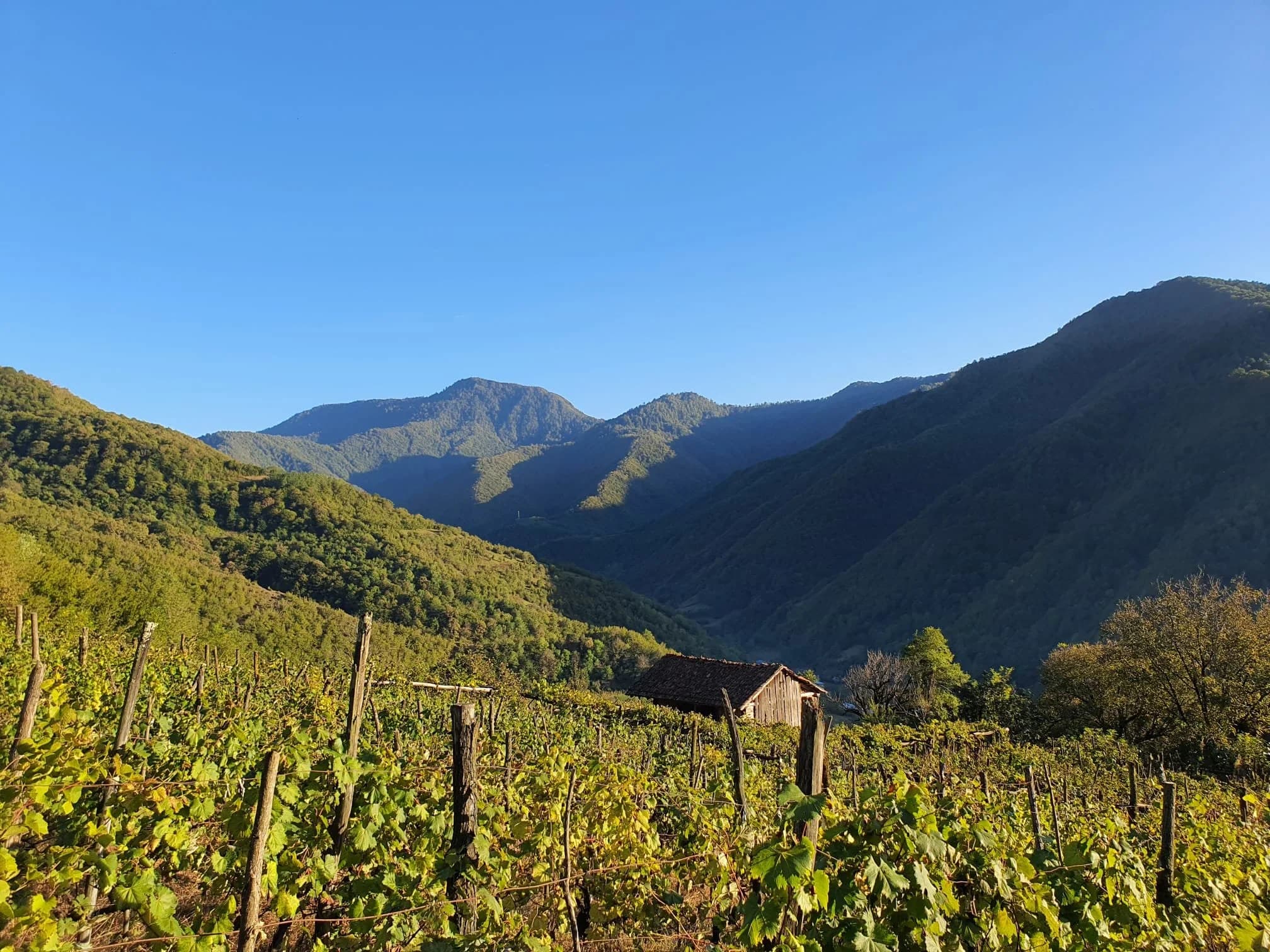
Our qvevri wines
Native Georgian grape varieties, wild yeasts and clay qvevri buried beneath the cellar floor.
The grapes
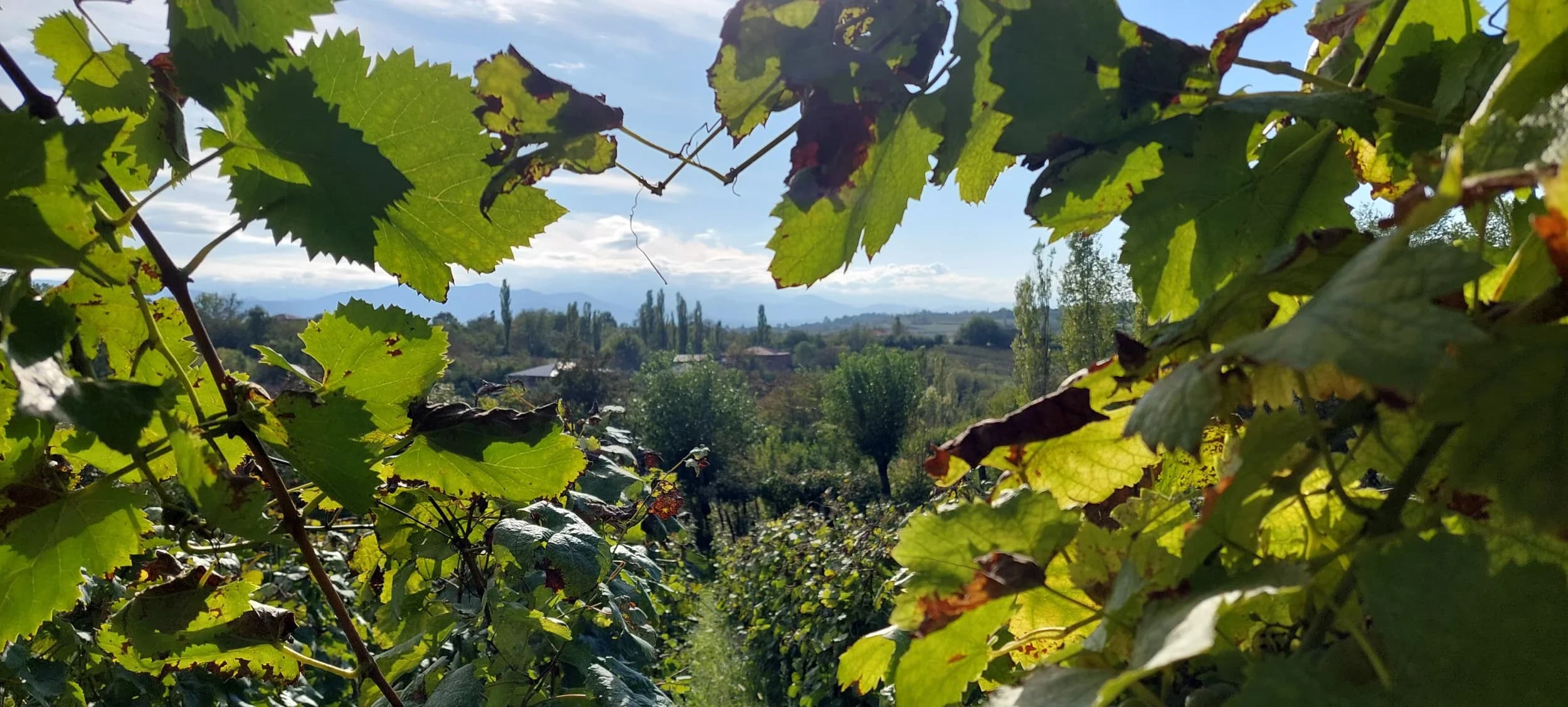
Our vineyards and growers
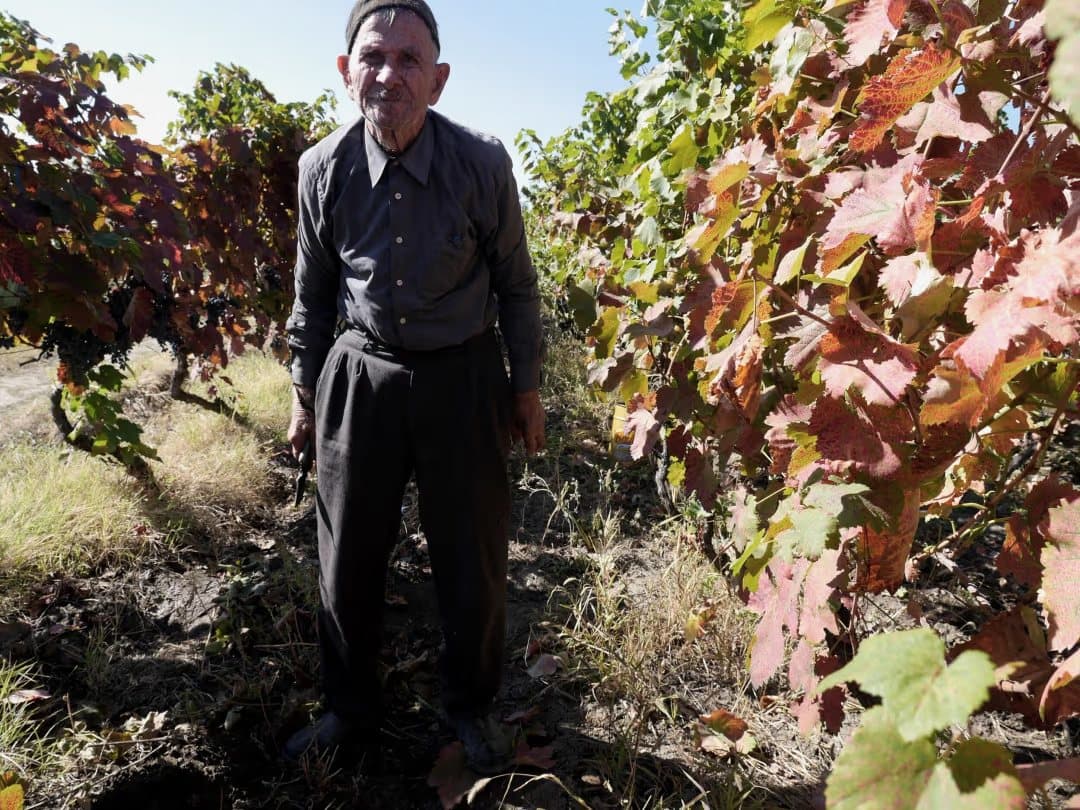
We are at home in western Georgia and work with growers on chosen sites across the country’s wine regions: Saperavi and Rkatsiteli from Kakheti in the east, Krakhuna and Tsitska from Zovreti near our cellar, Otskhanuri Sapere from Tskhratskharo, Ojaleshi from Bandza in Samegrelo. Some of these varieties were nearly lost in the Soviet decades. All of them we make the western Georgian way, without stems.
The grape varieties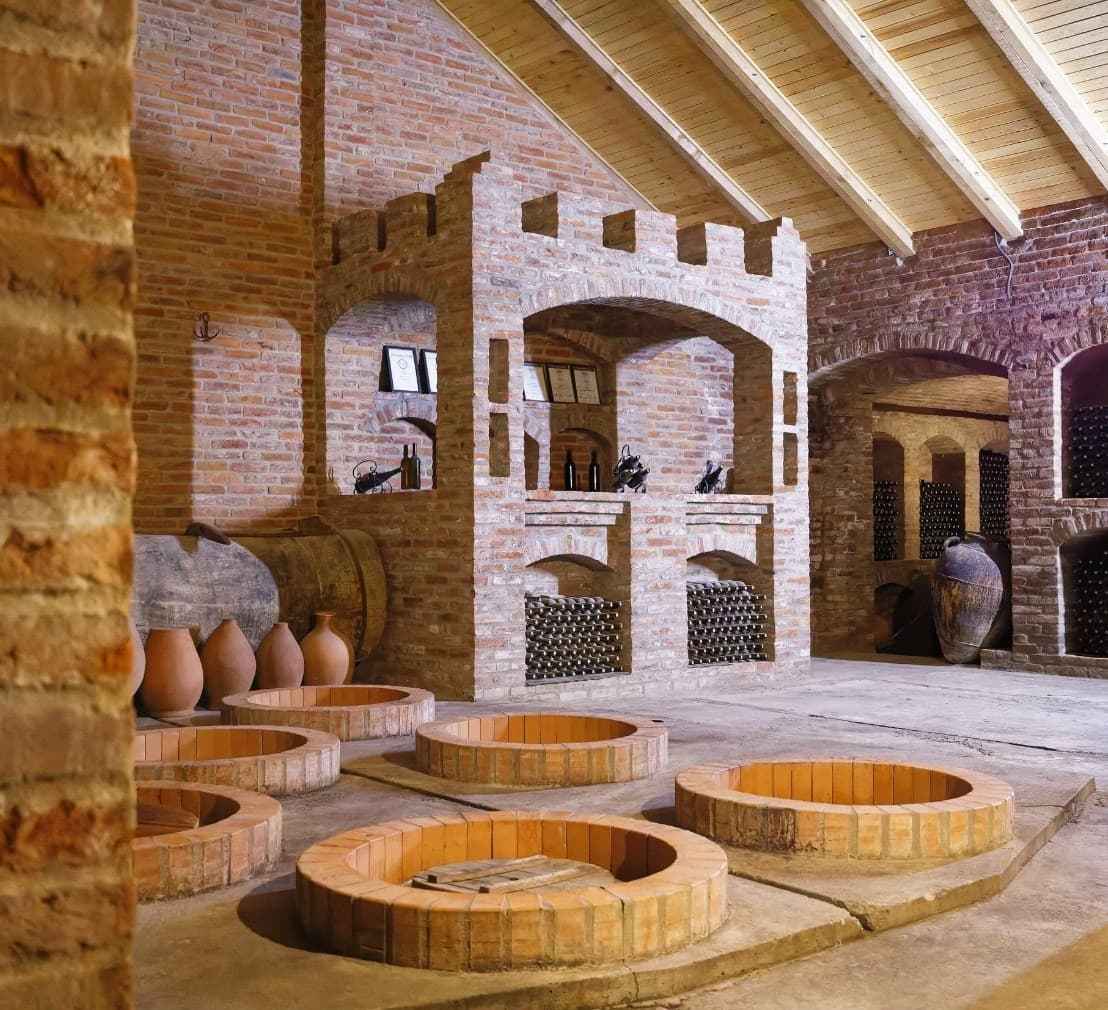
The qvevri
What is a qvevri?
Qvevri are large clay vessels buried in the ground up to their necks. Georgians have been making wine in them for around 8,000 years. Ours are made by a family of artisans in a village near Chiatura. The clay is porous, allowing small amounts of oxygen to reach the wine as it matures, adding depth and complexity.
After every use, we clean our qvevri and heat them to up to 400 °C for 12 to 36 hours using a system of metal coils we built ourselves. While the clay is still hot, we coat the inside with beeswax from the nearby mountains. The wax protects the wine while allowing the clay to continue breathing.
In the vineyard and in the cellar
How we make our wine
We harvest by hand, sort the grapes and remove the stems. Unlike the traditional practice in eastern Georgia, we leave the stems out of our qvevri. Depending on the grape variety and the style of wine, the juice ferments with the skins for days or weeks, using only the natural yeasts carried in from the vineyard. This is how our amber wines develop their colour and texture, and our reds gain their depth.
After fermentation, we separate the wine from the skins and transfer it to a second qvevri, where it rests for months, sometimes up to two years. We intervene as little as possible. Many of our wines are bottled unfiltered, and some remain in the cellar for years before we release them.
The grapes
The grapes we work with
Red grapes
Saperavi
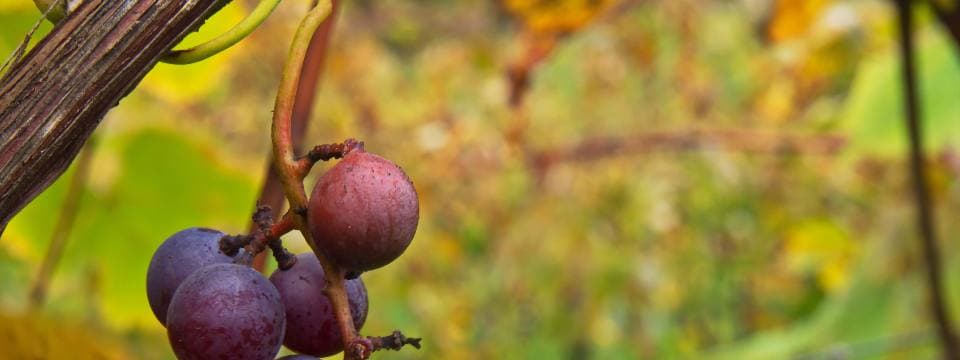
Eastern Georgia, KakhetiGeorgia’s signature red grape. Almost black in the glass, with dark fruit, firm tannins and the potential to age for decades.
More about this grape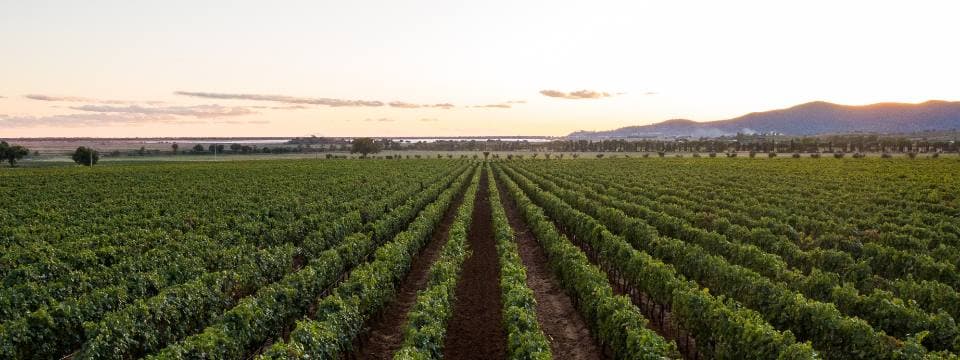
Otskhanuri Sapere
Western Georgia, ImeretiOne of Imereti’s oldest and rarest red grape varieties. Firm tannins, high acidity, dark fruit and spice. A wine that needs time to mature and rewards those who wait.
More about this grape
Ojaleshi
Western Georgia, SamegreloA rare red from the humid hills of Samegrelo. Violets, wild berries and a quiet freshness.
More about this grapeGrapes for white and amber wines
Rkatsiteli
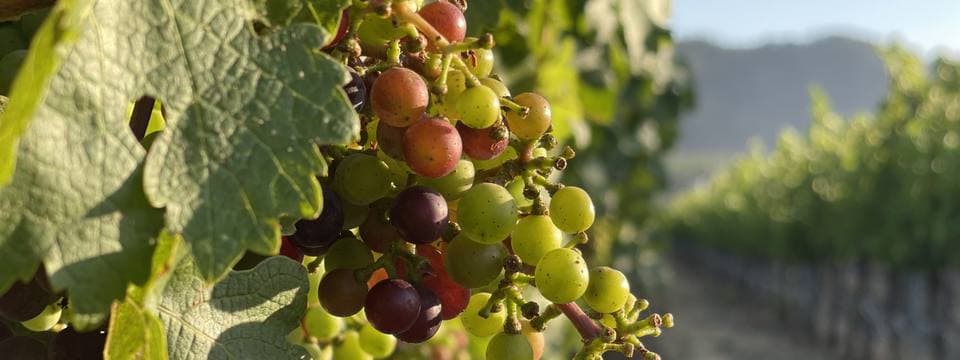
Eastern Georgia, KakhetiGeorgia’s signature white grape. As an amber wine, it shows notes of honey, walnut and dried apricot. As a late-harvest white, it is rich, full-bodied and surprisingly complex.
More about this grape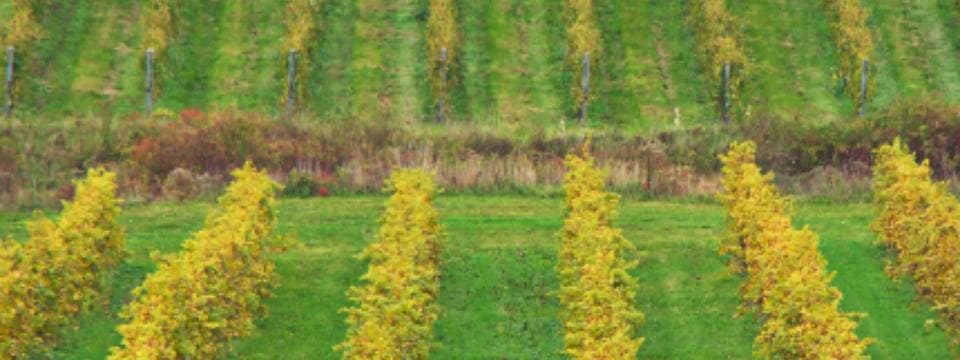
Krakhuna
Western Georgia, ImeretiA rare and iconic Imeretian white grape with body and aromatic depth: apricot, quince and floral notes, balanced by fresh acidity that gives it structure.
More about this grape
Khikhvi
Eastern Georgia, KakhetiOnce an important Georgian white grape, nearly lost and now being rediscovered. Floral notes, honey and stone fruit, whether made as a white or an amber wine.
More about this grape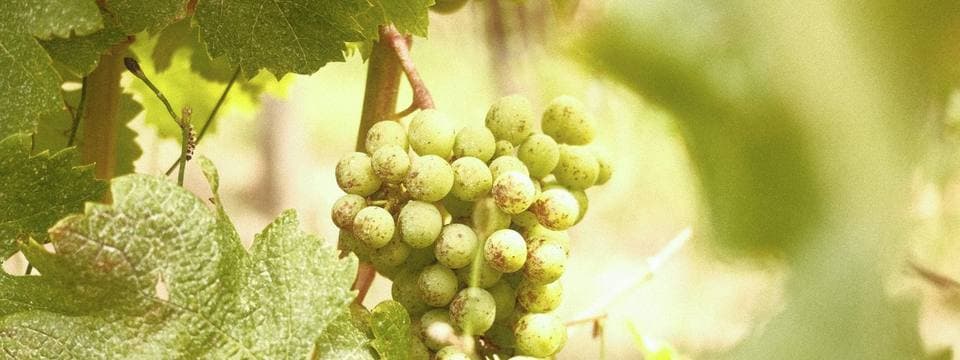
Tsitska
Western Georgia, ImeretiAn Imeretian white grape known for its lively acidity. It brings freshness to our Krakhuna blends but also shines on its own, with notes of green apple, citrus and white blossom.
More about this grapeWines to taste at the winery
Some of our small-batch and experimental wines never make it to the shop. You can taste them when you visit our cellar.